
In order to improve education systems throughout Africa, digital teacher training has become crucial. It describes the process of preparing educators to use contemporary technology in teaching and learning activities, including computers, cellphones, tablets, projectors, online learning platforms, and educational software. Teachers must have the abilities and know-how necessary to successfully incorporate technology into the classroom as African nations continue to embrace digital education. Teachers who receive digital teacher training are better equipped to employ educational technologies that enhance learning outcomes, manage virtual classrooms, create online lessons, and interact digitally with students.
The enhancement of teaching quality is one of the main advantages of digital teacher training. Teachers who are proficient with digital tools can design lessons that are more dynamic and captivating for their pupils. Teachers can make complex ideas easier to understand by using videos, presentations, animations, virtual simulations, and online tests in addition to textbooks and conventional teaching techniques. This improves student comprehension of the material and boosts engagement in the classroom. By modifying lessons to accommodate students’ varying skill levels and learning rates, technology also enables educators to customize instruction.
Access to education is also improved by digital teacher training, particularly in rural and isolated parts of Africa. There are teacher and educational resource shortages in many communities’ schools. Trained educators can use digital technology to offer educational resources and deliver lessons online to students who might not otherwise have access to high-quality education. Teachers with digital training were able to continue teaching using online courses, educational apps, television shows, and mobile learning platforms during catastrophes like the COVID-19 epidemic. This made it possible for a large number of students to continue their education even during the brief closure of schools.
Enhancing teachers’ confidence and professional growth is another significant advantage of digital teacher training. Teachers acquire useful digital abilities that enable them to adjust to evolving educational systems and contemporary instructional techniques. To increase their expertise and teaching skills, they might take part in webinars, online seminars, and virtual training courses. Additionally, teachers can exchange teaching resources, work together with educators from various nations, and pick up new techniques for engaging students and managing the classroom. The general standard of instruction in African schools is raised by this ongoing learning.
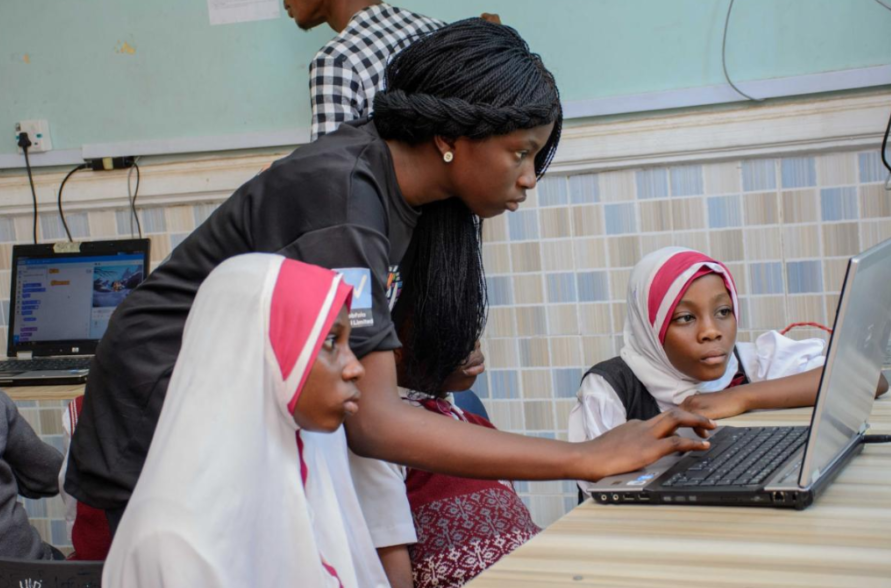
Students’ growth in digital literacy is also aided by digital teacher training. Teachers who are proficient in technology can assist pupils in acquiring critical computer and internet skills that are necessary in today’s world. Online research, digital communication, word processing, virtual collaboration, and other ICT skills that are essential for postsecondary education and future employment are introduced to students. Digital literacy is becoming more and more crucial for African students as the world economy becomes more reliant on technology.
Additionally, digital teacher training enhances school administration and instructional management. Digital technologies allow teachers and school administrators to more effectively monitor student performance data, create reports, keep track of attendance, and interact with parents. Organizing tests, assignments, and academic records is also made simpler by online tools. As a result, there is less paperwork, time is saved, and overall school operations are more efficient. Stronger educational institutions and better learning environments are a result of better management systems.
To improve their educational systems, a number of African nations are making significant investments in digital teacher training programs. Kenya has implemented ICT integration programs that teach educators how to use digital devices and online learning materials in the classroom. To encourage digital learning across the country, Rwanda has made investments in smart classrooms and teacher technology training. Both schools and universities in South Africa make use of online learning platforms and teacher development initiatives. Additionally, Tanzania is funding digital education programs that assist educators in enhancing their ICT proficiency and using technology to enhance classroom instruction.
Digital teacher training in Africa is also being supported by private technology businesses and international organizations. Teachers and schools throughout the continent receive technical assistance, digital learning resources, and training programs from organizations like UNESCO and UNICEF. In order to promote contemporary teaching and learning, technology companies collaborate with governments and educational institutions to offer reasonably priced digital equipment, internet connection, and instructional software.
Even while digital teacher training has many benefits, there are still a number of obstacles that prevent it from being widely used in Africa. Many schools lack the computers, internet access, energy, and other technology infrastructure needed for digital learning. Teachers in certain remote regions might not be as proficient in digital literacy and need more technical assistance and training. Some schools and teachers find it challenging to fully implement digital education systems due to high internet fees and restricted access to digital gadgets. In some regions of the continent, these obstacles still impede the expansion of technology-based education.
As long as governments, academic institutions, and international organizations continue to invest in technology and teacher development, digital teacher training in Africa has a bright future. It is anticipated that more schools would be provided with digital gadgets, ICT resources, and internet connection to assist contemporary teaching techniques. African educational systems will become more creative, inclusive, and successful as educators gain proficiency with digital technology. Therefore, digital teacher training is crucial in equipping African students with the knowledge and digital skills necessary to thrive in the contemporary